

Multi Jet Fusion (MJF) 3D Printing Service in India
Manufacturing strong, detailed nylon parts for functional prototypes and production using Multi Jet Fusion technology. Champ3D helps Indian engineering teams, product developers, startups, and manufacturers move from a digital model to finished MJF parts through an online ordering workflow.
MJF is well suited to complex geometries, batch production, and parts that need consistent mechanical performance without removable support structures.
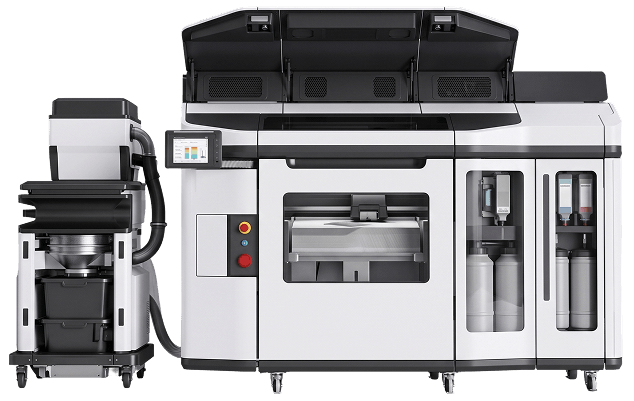
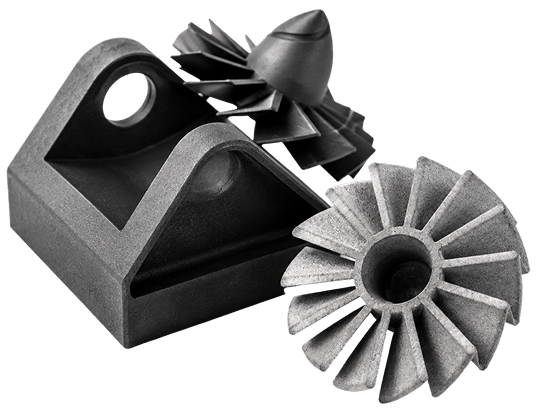
What Is Multi Jet Fusion (MJF) 3D Printing?
Multi Jet Fusion, commonly called MJF, is a powder-bed additive manufacturing process used to create polymer parts layer by layer. A thin layer of powder is spread across the build area, specialised agents are applied to define the part geometry, and controlled thermal energy fuses the selected regions. The surrounding unfused powder supports the parts during the build, which allows complex shapes to be produced without conventional support structures.
Advantages of MJF 3D Printing
- Produces functional nylon parts suitable for prototyping and end-use applications.
- Supports complex shapes, internal features, and nested parts because the powder bed provides support.
- Offers consistent part quality across batches when process settings and material conditions are controlled.
- Works well for low-volume and bridge production where tooling may not be practical.
- Can produce multiple parts within one build, making it useful for batch manufacturing.
- Offers several post-processing options for appearance, handling, and application requirements.
MJF Process Explained - Step by Step
MJF turns a digital 3D model into a finished polymer part through a repeatable powder-bed process. The steps below explain the workflow in a way customers can understand before placing an order.
Upload Your CAD File
Submit your 3D model in STL, STEP, or other supported formats. Our team reviews the design for printability and recommends any necessary optimizations.
Powder Layer & Agent Application
A thin layer of nylon powder is spread across the build platform. Precision printheads selectively deposit fusing and detailing agents onto each layer.
Thermal Fusion
Infrared energy fuses the treated areas while untreated powder remains loose, creating strong, dimensionally accurate parts one layer at a time.
Cooling & Powder Removal
After printing, the build cools under controlled conditions. Excess powder is removed and recycled, revealing the finished parts.
Finishing & Quality Inspection
Parts are cleaned, inspected, and can be finished with bead blasting, dyeing, or other post-processing options before shipment.
Ready to Quote an MJF Part?
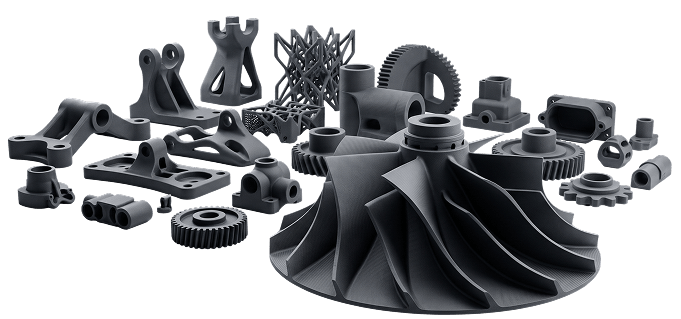
Material Used for Champ3D MJF 3D Printing
Champ3D offers Nylon PA12 HP for MJF projects. PA12 is a widely used engineering polymer for functional prototypes and production parts because it balances strength, low weight, dimensional stability, and everyday durability.
Why Choose Nylon PA12 HP for MJF?
- Suitable for functional parts that need repeated handling and regular use.
- Works well for detailed geometries and compact mechanical features.
- Offers a useful balance between strength and low part weight.
- Can be used for housings, brackets, covers, fixtures, product components, and many general engineering parts.
- Provides consistent performance across a properly controlled MJF build.
- Can be post-processed when a different colour, feel, or surface appearance is required.
Design Guidelines for MJF 3D Printing
Design choices affect printability, dimensional control, powder removal, and part durability. Use the following values as project-planning guidance and confirm critical features during engineering review before production.
Surface Finishing Options for MJF 3D Printed Parts
Fresh MJF parts typically have a fine, matte, slightly textured surface. For projects that need a different appearance or touch, approved post-processing can be selected according to the part geometry, colour requirements, and intended use.
How to Order MJF 3D Printed Parts Online in India
Champ3D keeps the MJF ordering process straightforward so customers can move from a digital model to a manufacturing request without unnecessary steps.
Get Your MJF 3D Printed Parts in 4 Simple Steps
Step 1
Upload Your 3D File
Submit your model through the India quote tool using a supported file format.
Step 2
Review of the Quote and Requirements
Choose the available MJF material and order specifications. Review the generated pricing and any design feedback provided for the part.
Step 3
Confirm MJF Production
Once the quote and specifications are approved, the order moves into the MJF manufacturing workflow.
Step 4
Inspection and Delivery in India
The finished parts are cleaned, inspected, packed, and dispatched to the confirmed delivery address in India.
Ready to Start with MJF 3D Printing?
Upload your model to review available MJF manufacturing options for your project in India.
Frequently Asked Questions
Upload your design today and get an instant quote for MJF 3D printing.
Let's Discuss Your Production Needs
Hello! Tell us a bit about your project, and a engineers will follow up to discuss how we can help scale your 3D printed parts from prototype to full production volume.