

SLM 3D Printing Service in India
Build dense metal parts for prototypes, functional testing, tooling, and production using Selective Laser Melting. Champ3D supports Indian engineering teams with online file submission, metal material options, technical review, and delivery across India.
Designed for complex metal geometry, internal channels, lightweight structures, and components that need strong mechanical performance.
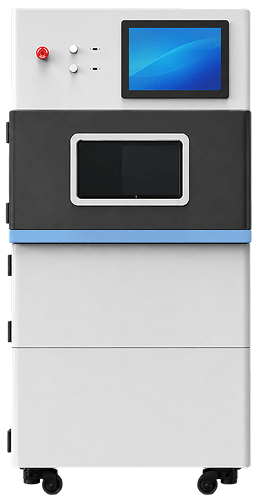
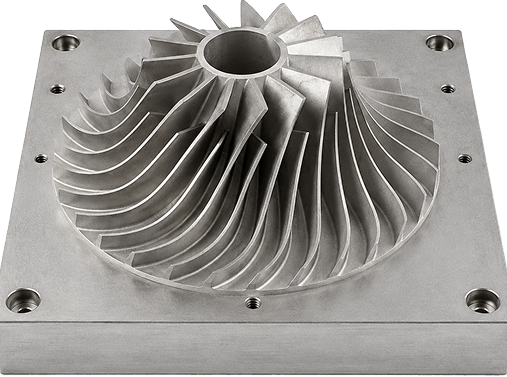
What Is SLM 3D Printing?
Selective Laser Melting (SLM) is a metal additive manufacturing process that uses a high-energy laser to fully melt selected areas of fine metal powder. The part is formed one thin layer at a time directly from a 3D CAD model. Because the material is melted rather than simply bonded, SLM can produce dense metal components with complex shapes that may be difficult to make with conventional machining alone.
Why Engineers Use SLM
- Produces dense, functional metal components for demanding mechanical applications.
- Allows internal channels, lattice structures, and consolidated geometries that are difficult to machine.
- Supports lightweighting by placing material only where the design needs it.
- Reduces dependence on dedicated tooling for prototypes and low-volume metal parts.
- Used across aerospace, automotive, energy, tooling, industrial equipment, and selected medical applications where the chosen material and production requirements permit.
How the SLM Process Works — Step by Step
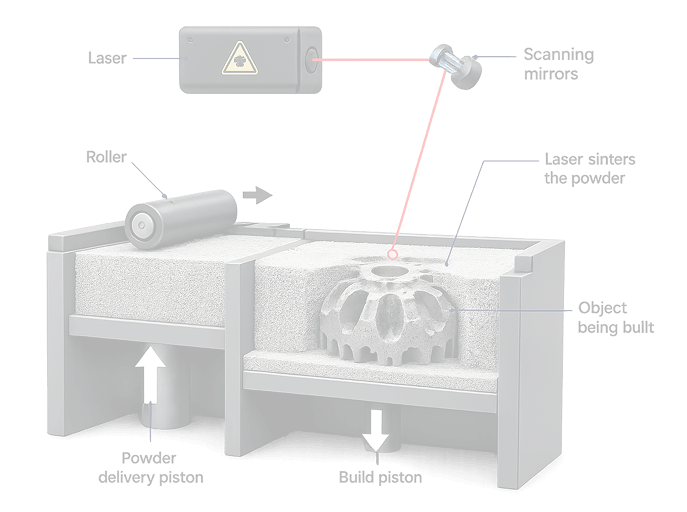
SLM converts a digital metal part design into a physical component by repeating a controlled powder-spreading and laser-melting cycle. Each stage influences geometry, surface quality, dimensional control, and post-processing requirements.
Prepare the CAD Model
The 3D model is reviewed for build orientation, support requirements, critical features, and areas that may need machining allowance.
Apply a Thin Metal Powder Layer
A recoating system spreads a uniform layer of metal powder across the build platform.
Melt the Required Geometry
A laser follows the sliced cross-section of the part and fully melts the selected powder. The molten region solidifies and bonds to the previous layer.
Repeat the Build Cycle
The platform moves down, a fresh powder layer is applied, and the laser scans the next cross-section. The cycle continues until the complete geometry is built.
Remove and Finish the Part
After the build, loose powder is removed and the component is separated from the build plate. Depending on the requirement, support removal, heat treatment, machining, blasting, or polishing may follow.
Ready to Price Your SLM Part?
Metal Materials Commonly Used for SLM
Metal selection should follow the required strength, mass, corrosion resistance, thermal behavior, machinability, and end-use environment.
Here are the metal choices available at Champ3D.
Design Guidelines for SLM Parts
Good SLM design balances geometry, support access, heat flow, powder removal, and finishing requirements. Use the table below as a starting point, then validate the final design against the selected metal and production setup.
Surface Finishing Options for SLM 3D Printed Parts
As-built SLM parts usually show a fine matte or grainy texture caused by layer formation, partially fused particles, support contact, and build orientation. Finishing can be selected according to cosmetic, dimensional, or functional requirements.
How to Order SLM 3D Printed Parts in India
Champ3D’s India ordering flow is designed to move a metal part from CAD file to quote review and production without unnecessary back-and-forth.
Get Your SLM 3D Printed Parts in 4 Simple Steps
Step 1
Upload Your 3D File
Submit your CAD model through the India quote page.
Step 2
Select Material and Requirements
Choose the available SLM metal, quantity, and any relevant finishing options.
Step 3
Review the Quote
Review the quoted price and project details. If the model needs engineering clarification, the team can request the required information.
Step 4
Delivery Across India
Finished parts are packed and shipped to the delivery address selected for the order.
Start Your SLM 3D Printing Project
Upload your 3D model, select the available metal option, and get a quote for custom SLM 3D printed parts in India.
Frequently Asked Questions
Upload your design today and get an instant quote for SLM 3D printing.
Let's Discuss Your Production Needs
Hello! Tell us a bit about your project, and a engineers will follow up to discuss how we can help scale your 3D printed parts from prototype to full production volume.