

FDM PETG
PETG — Tough, Moisture- and Chemical-Resistant Thermoplastic for Functional Parts
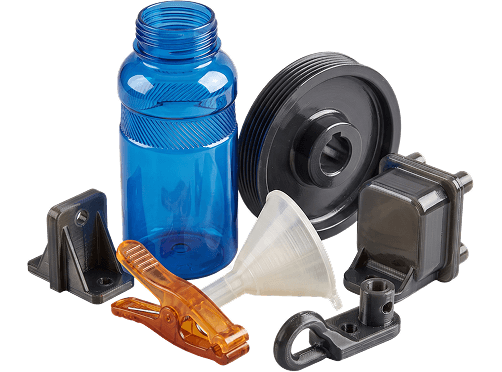
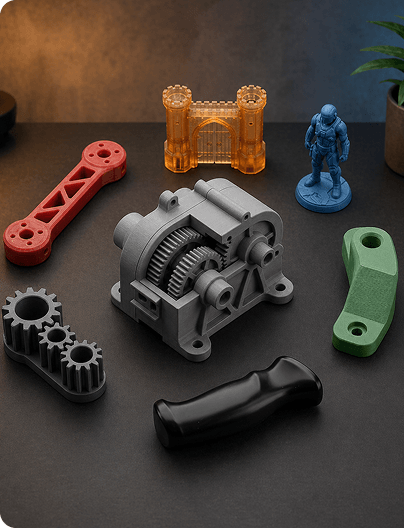
PETG combines useful toughness, dimensional stability, moisture resistance and chemical resistance, making it suitable for functional prototypes, housings, containers, fixtures and industrial components.
- Chemical &Moisture Resistant
- Tough &Dimensionally Stable
- Good LayerBonding
- Suitable forFunctional Parts


PETG Material Overview
PETG (Polyethylene Terephthalate Glycol-Modified) is a versatile thermoplastic used in FDM 3D printing for functional parts that need a balance of toughness, dimensional stability, moisture resistance and chemical resistance.
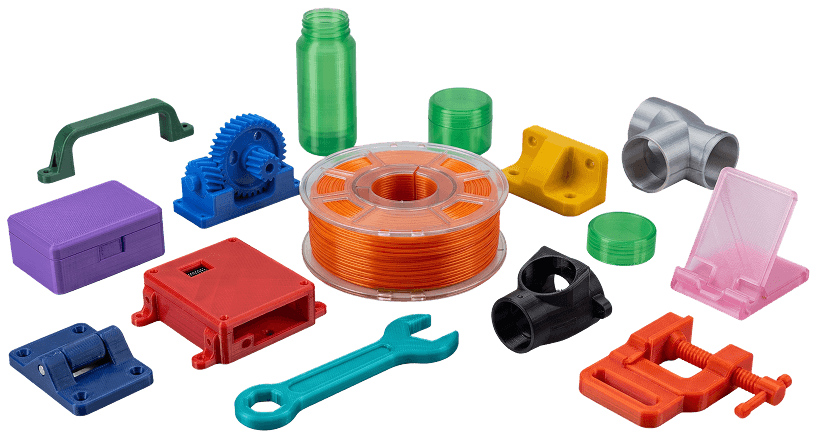
PETG is commonly considered for housings, containers, fixtures, prototypes and industrial components. It also offers good layer bonding and a lower tendency to warp than some engineering thermoplastics.
Depending on the material grade, geometry, print orientation and finishing method, PETG parts may also be produced with a translucent or transparent appearance.
PETG Material Properties and Technical Specifications
Representative values — actual properties vary by material grade, build orientation, process parameters and test conditions.
Common PETG 3D Printing Applications
PETG is commonly used where toughness, moisture resistance, chemical resistance and dimensional stability are useful.
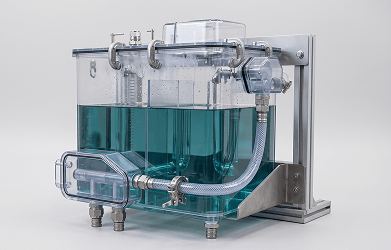
Fluid Handling & Containers
PETG can be used for tanks, reservoirs, covers and fluid-related components where its material properties are compatible with the intended environment.
Chemical compatibility and leak resistance should be verified for the specific application.
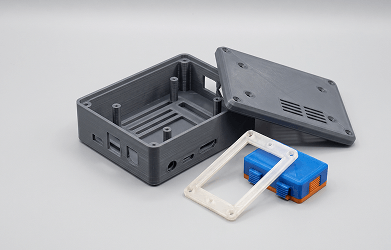
Electronics Enclosures
PETG is suitable for functional housings, covers and mounting components where durability and dimensional stability are important.
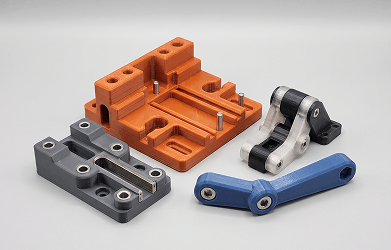
Jigs, Fixtures & Functional Prototypes
PETG can be used for assembly aids, production fixtures and prototypes that need useful toughness and reliable printed-part performance.
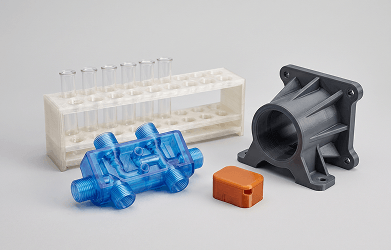
Laboratory & Industrial Components
PETG can be considered for custom equipment, lab components and industrial parts where moisture or chemical exposure is a factor.
For critical chemical applications, compatibility should always be checked against the actual substance and operating conditions.
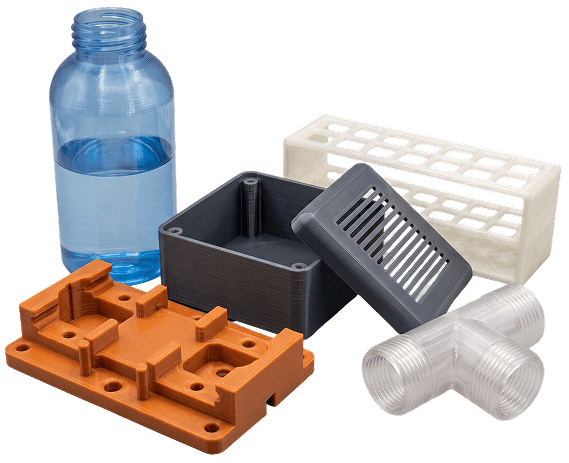
When Should You Choose PETG for 3D Printing?
PETG is a good choice for FDM parts that need toughness, dimensional stability, moisture resistance and chemical resistance.
Consider PETG when your application involves:
- Functional prototypes
- Housings and protective covers
- Containers and reservoirs
- Jigs and fixtures
- Industrial components
- Laboratory components
- Moisture or humid environments
- Chemical exposure that has been verified as compatible
- Parts where lower warping tendency is useful
- Translucent or transparent appearance requirements
What is PETG used for in FDM 3D printing?
PETG is used for functional prototypes, housings, containers, fixtures and industrial components that benefit from toughness, dimensional stability, moisture resistance and chemical resistance.
PETG vs Other FDM Materials
Material selection should be based on the final environment, mechanical requirements, temperature exposure, surface finish and intended use of the part.
PETG Performance Considerations
How Chemical Resistant Is PETG?
PETG resists many common chemicals, but “chemical resistant” should not be treated as universal compatibility.
Actual resistance depends on:
- Chemical type
- Chemical concentration
- Exposure temperature
- Contact duration
- Material grade
- Mechanical stress
- Printed-part geometry
For laboratory, fluid-handling or industrial applications involving chemicals, confirm compatibility with the specific substance before production.
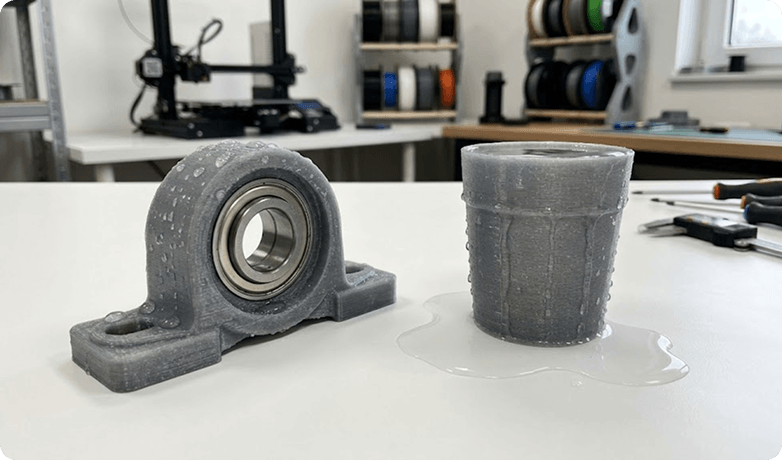
Is PETG Waterproof or Moisture Resistant?
PETG is moisture resistant, but that does not automatically mean every 3D printed PETG part is watertight.
Final leak resistance depends on factors such as:
- Part geometry
- Wall construction
- Layer bonding
- Print parameters
- Build orientation
- Post-processing
If a part needs to hold liquid or operate under pressure, the final design and manufacturing requirements should be reviewed before production.
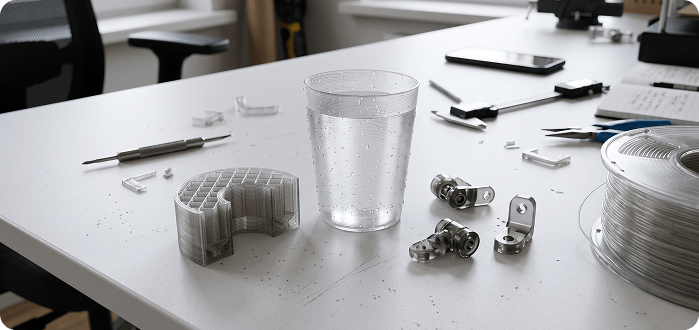
Can PETG 3D Printed Parts Be Transparent?
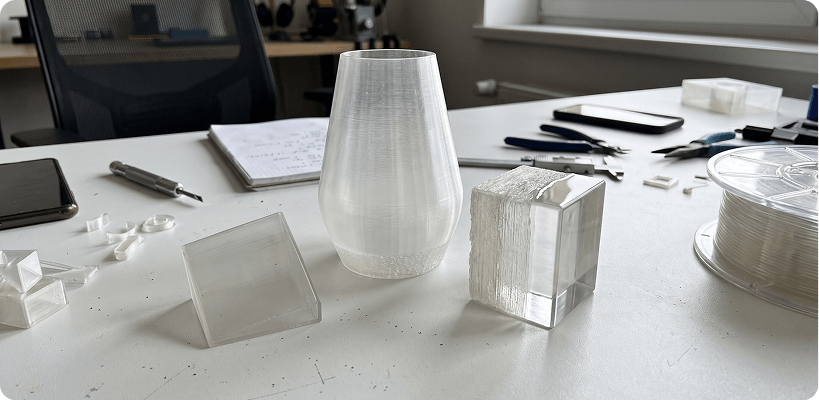
Certain PETG grades can produce translucent or transparent-looking parts.
The final appearance depends on:
- Material grade
- Part geometry
- Wall thickness
- Build orientation
- Layer structure
- Surface finish
- Polishing method
FDM layer lines can limit optical clarity, so PETG should not be assumed to provide optical-grade transparency without application-specific testing.
PETG 3D Printing Design Considerations
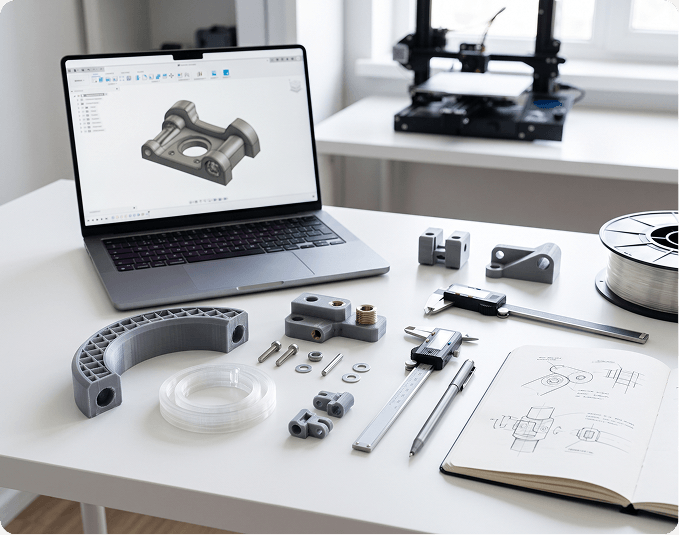
The final performance of a PETG part depends on the material grade, geometry, orientation and manufacturing process.
When preparing a PETG part for FDM 3D printing, consider:
- Part geometry
- Build orientation
- Support requirements
- Functional loading
- Moisture exposure
- Chemical exposure
- Surface finish
- Transparency requirements
- Machining or tapping requirements
- Assembly features
- Dimensional requirements
For applications where chemical exposure, leak resistance, mechanical performance or dimensional accuracy are important, review the design requirements before ordering.
PETG Finishing Options
Support Removal
Supports can be removed after printing to prepare the part for use or further finishing.
Sanding & Surface Smoothing
Sanding can improve the surface appearance and reduce visible layer texture.
Polishing
Final clarity depends strongly on geometry, layer orientation, wall structure and finishing method.
Painting & Coating
PETG parts can be painted or coated where the selected coating system is compatible with the material.
Machining & Tapping
PETG parts can be machined or tapped where the geometry provides sufficient material around the feature.


Related FDM Materials


Frequently Asked Questions
Ready to Start Your PETG Project?
Upload your 3D model for a quote or speak with our team about PETG material selection, design, chemical exposure and finishing requirements.