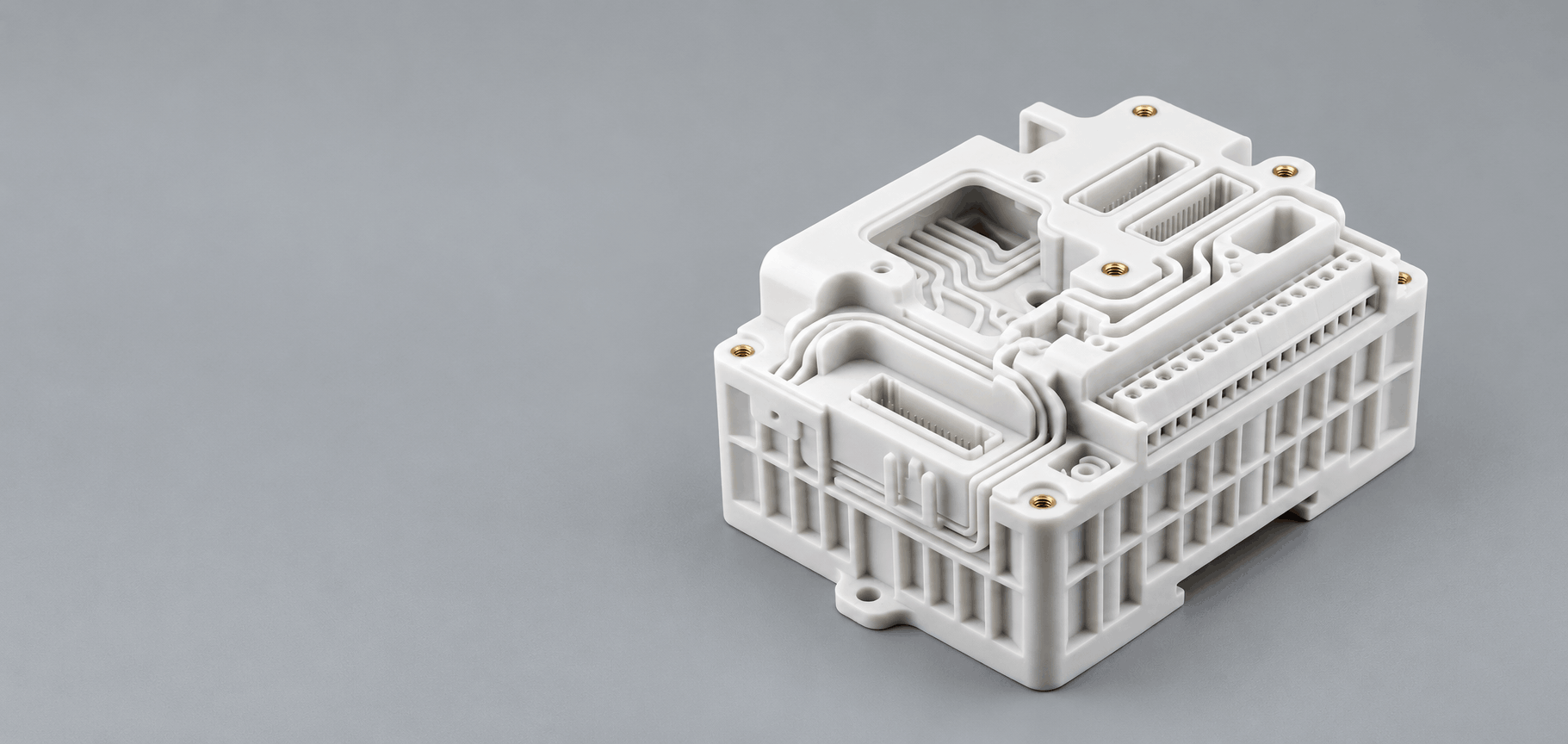
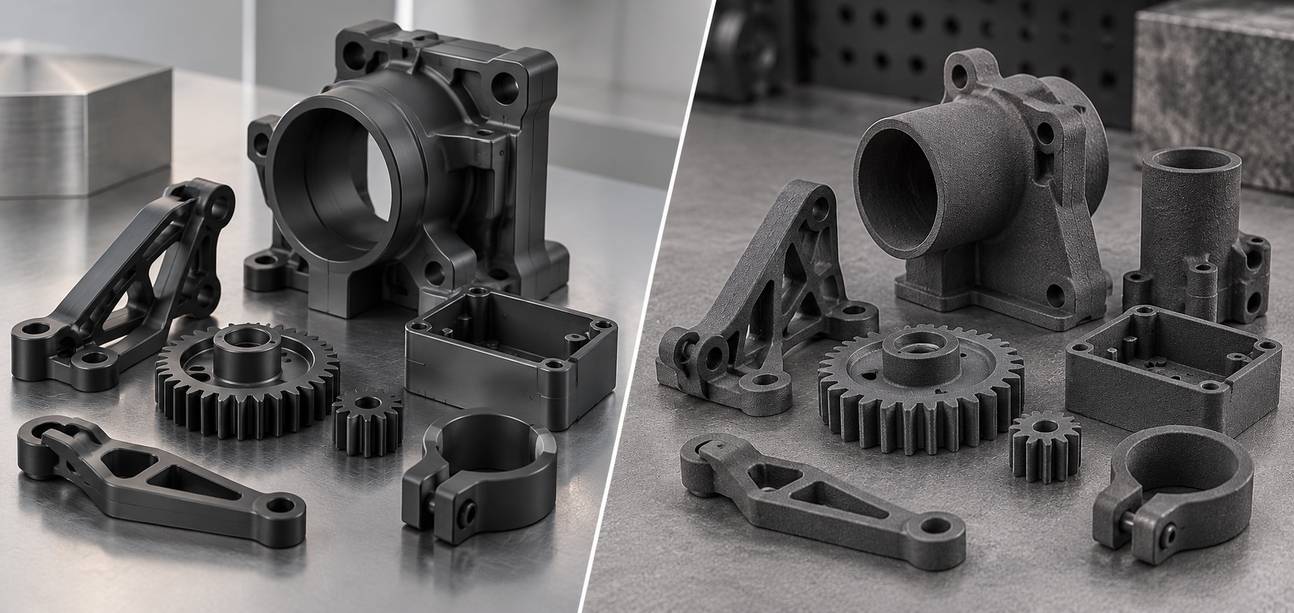
MJF vs SLS 3D Printing: Which Process Is Better for Functional Parts?
Listen to Content
The better choice in MJF vs SLS depends on what your part must do, the available material, and the provider’s manufacturing process. Both technologies can produce complex plastic parts, but neither process name alone establishes strength, fit, finish, or suitability for an end use.
Start with your requirements: loads, moving features, mating dimensions, environment, appearance, and quantity. Then compare proposals for the same model.
This guide explains the process differences and practical selection questions. General design and sourcing advice is identified separately from Champ3D’s listed capabilities.
What Is MJF 3D Printing?
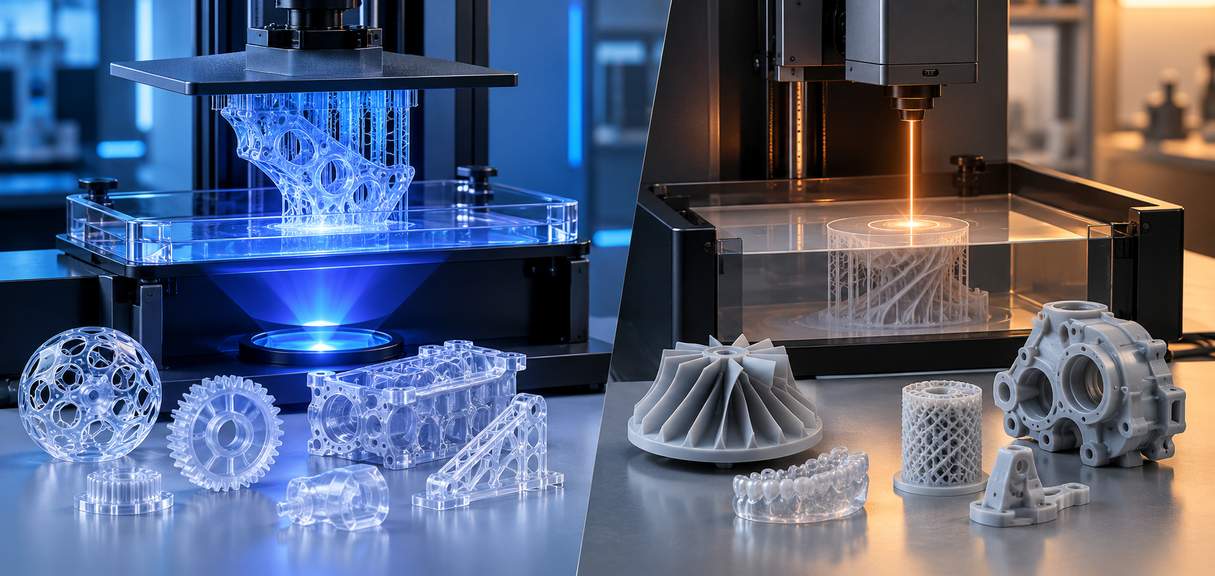
Multi Jet Fusion builds parts within a bed of powder. Printheads apply fusing and detailing agents, and thermal energy fuses selected areas. Layers are added until the part is complete. The build then cools, and unfused powder is removed.
Champ3D describes this agent-based process and offers an MJF 3D Printing Service.
MJF is worth exploring for working prototypes and production projects when the selected material and process meet the requirements. As a general sourcing practice, discuss the finished part’s performance and inspection needs instead of assuming that a production-oriented process automatically validates your application.
What Is SLS 3D Printing?
Selective Laser Sintering uses a laser to fuse powder in selected areas, building the object layer by layer. The surrounding unfused powder supports the developing geometry. After cooling, the part is removed and cleaned.
Champ3D describes SLS as a process for prototypes, functional components, and complex designs. Explore its SLS 3D Printing Service when assessing manufacturing options.
The powder support reduces the need for conventional printed support structures. However, general design checks still apply to thin features, enclosed spaces, and powder-removal access. A geometry that can be built must also be cleaned and used effectively.
What Are the Key Differences Between MJF and SLS?
The central difference in Multi Jet Fusion vs Selective Laser Sintering is how energy is applied to form the part. MJF uses agents and thermal energy; SLS uses a laser. Both belong to powder bed fusion 3D printing.
The following table summarizes process distinctions and general selection considerations:
|
Factor |
MJF |
SLS |
|
Fusion method |
Agents and thermal energy |
Laser fusion |
|
Conventional supports |
Typically unnecessary; powder supports the part |
Typically unnecessary; powder supports the part |
|
Surface finish |
Depends on material and finishing |
Depends on material and finishing |
|
Mechanical performance |
Requires material and application assessment |
Requires material and application assessment |
|
Best choice |
Depends on the project requirements |
Depends on the project requirements |
The remaining comparison should focus on the offered material, finished condition, and agreed acceptance criteria.
Strength and Mechanical Performance
There is no universal winner for MJF vs SLS strength. As general engineering guidance, performance depends on material properties, geometry, build orientation, wall thickness, and post-processing.
Separate different requirements. A rigid bracket, a flexible snap feature, and a component exposed to repeated impact do not ask the material to behave in the same way.
Request relevant material data and explain the intended loads and environment. For important functional requirements, assess representative parts under suitable test conditions. Good appearance or a successful fit check does not prove durability in service.
Surface Finish and Detail
For MJF vs SLS surface finish, compare the actual finish being quoted. Both processes require powder removal, and the resulting appearance depends on material, processing, and subsequent treatment.
As a general buying practice, distinguish cosmetic expectations from functional surface needs. A visible enclosure may need an even appearance, while a sliding interface needs attention to texture and fit.
Ask for a representative sample or a clear description of the finished condition. Coatings and material-removal treatments can also affect dimensions. Do not assume a more polished-looking part will automatically perform better.
Available Materials
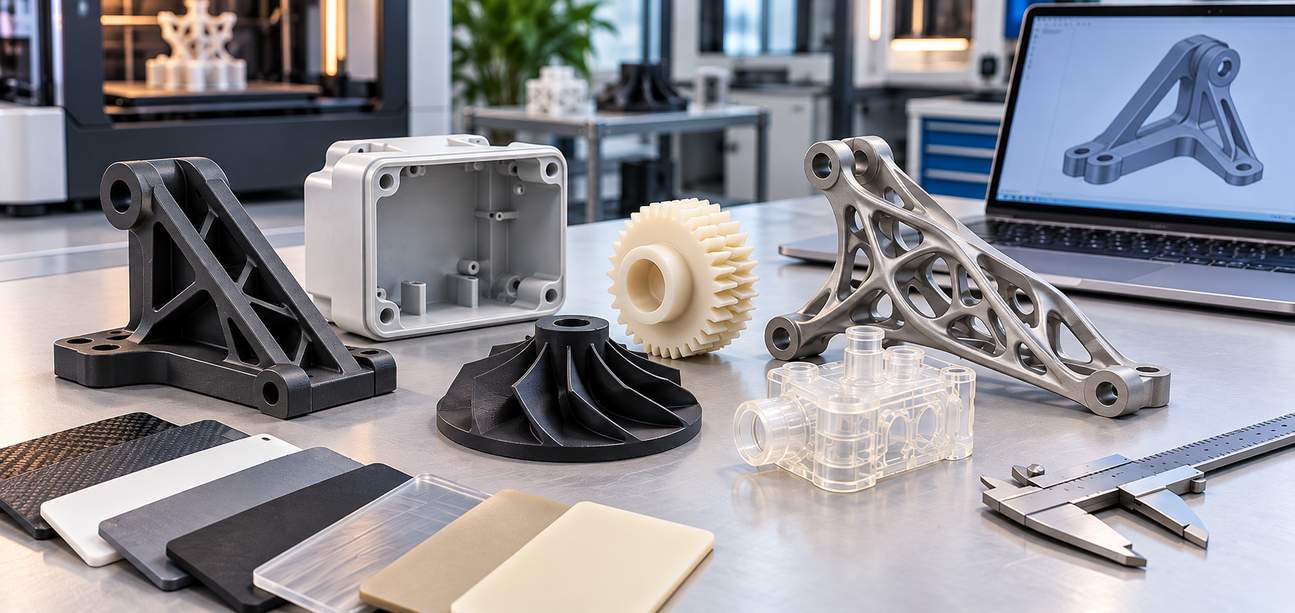
Champ3D lists Nylon PA12 HP for MJF and PA12 Black for SLS. These are verified offerings, but sharing a PA12 designation does not establish identical finished-part properties.
Material availability varies by provider and machine. Compare the specific offered grades and supporting data rather than relying on broad material-family names.
For either process, explain whether the part faces heat, chemicals, repeated bending, or other demanding conditions. Suitability should be confirmed for that application, not inferred from a general description of nylon.
Design Freedom and Complex Geometry
Both processes use surrounding powder to support parts during printing. This provides opportunities for complex shapes without conventional support removal.
General design considerations include internal channels, nested components, and moving assemblies. Each still requires suitable dimensions, separation between surfaces, and cleaning access.
Hollow designs need practical powder-removal openings. Print-in-place assemblies need gaps that permit separation and movement after cleaning. Do not assume that an inaccessible enclosed joint will work simply because additional supports are unnecessary.
Production Volume and Repeat Parts
MJF and SLS can both be considered for prototypes, bridge production, and low-volume projects. Bridge production means making parts while another manufacturing route is being prepared.
As general sourcing guidance, compare quotes for your actual quantity and specification. Build packing, geometry, finishing, inspection, and order scheduling influence the project.
For repeat orders, agree on the material, approved file version, finish, and critical dimensions. A successful sample provides a useful reference, but consistency requirements should still be communicated. Neither process should be declared cheaper or faster without a comparable project-specific proposal.
Which Process Is Better for Your Functional Part?
Choose MJF when its offered material, manufacturing proposal, and finished-part assessment meet your project requirements. MJF functional parts may be worth evaluating for repeated housings or components where you want to establish a consistent specification.
Choose SLS when its available material and process suit the geometry, fit, and use conditions. SLS functional parts may be appropriate candidates for prototype assemblies or complex components requiring accessible powder removal.
These examples are general selection guidance, not exclusive applications. Either process may suit either project. If your team already has validated results with one material-process combination, changing processes deserves another review.
To compare MJF vs SLS for functional parts, send the same model and requirements for both options. Specify critical fits, required finish, quantities, and testing expectations. Compare the proposals against those requirements rather than against a general process ranking.
Choose Against Requirements Before Ordering
A useful comparison connects the process to a specific part, material, and finished condition. Define what success means, review design limitations, and confirm the proposal before production.
Explore Champ3D’s Online 3D Printing Services to discuss your options.
Have a functional part ready for production? Upload your 3D model and get an instant quote from Champ3D for MJF or SLS 3D printing.