What Is MJF 3D Printing and How Does It Work?
Listen to Content
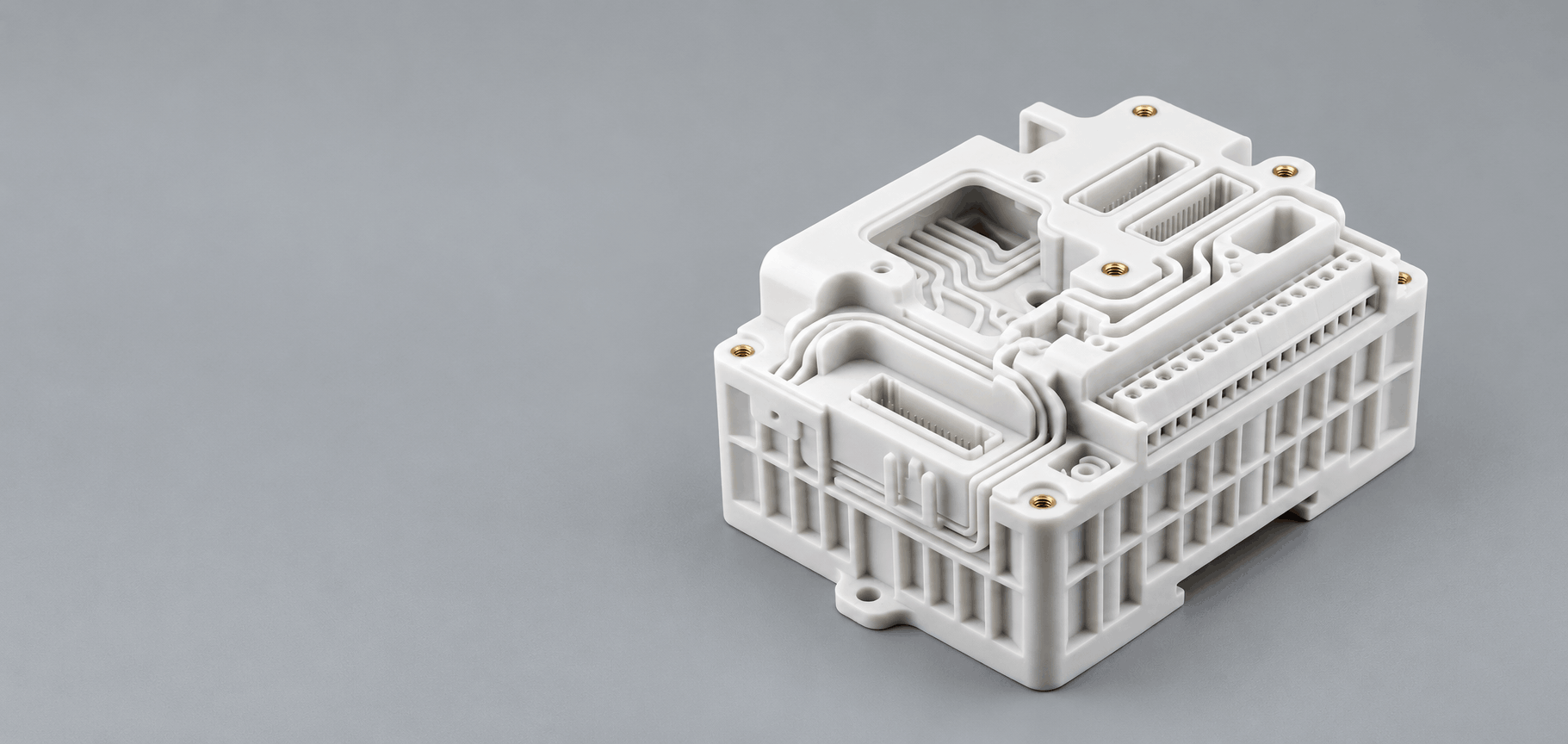
Multi Jet Fusion creates polymer parts from a bed of powdered material. The process can produce functional prototypes, housings, brackets, fit-check components, and batches of complex parts without conventional tooling. Its powder-bed workflow also supports geometries that would be difficult to manufacture through subtractive methods. Understanding the printing process, available material, benefits, and restrictions can help buyers decide whether MJF fits their project.
What Is MJF 3D Printing?
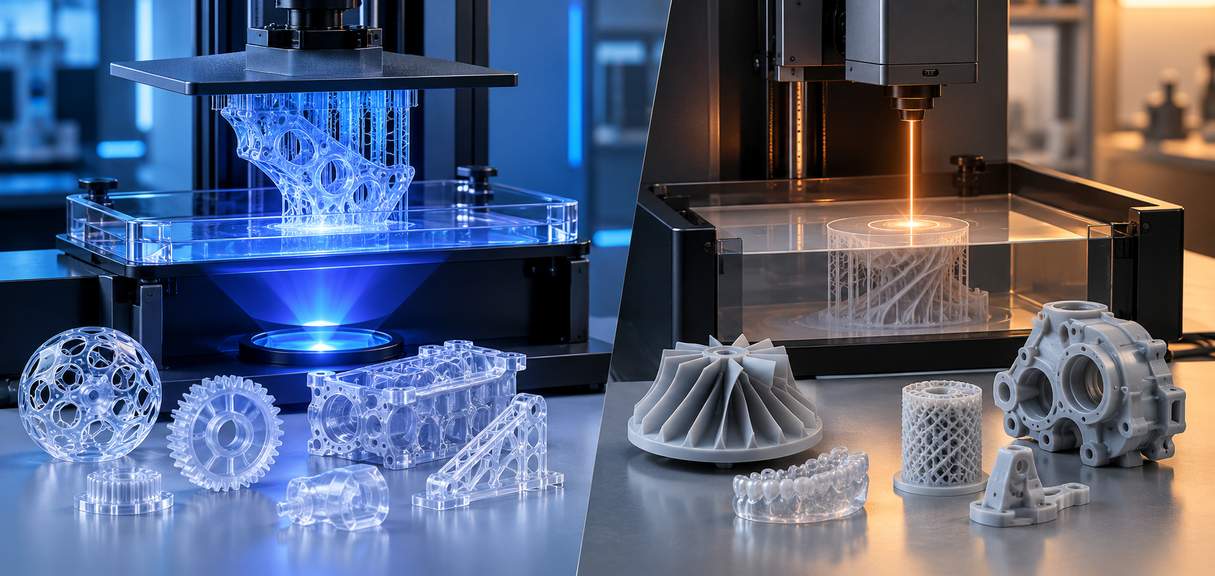
MJF, or Multi Jet Fusion, is a polymer powder-bed 3D printing technology. It uses printheads to deposit fusing and detailing agents across thin layers of powder. Thermal energy then acts on the treated areas to form the solid cross-section of the part.
The printer repeats this sequence until all layers are complete. Loose powder surrounds the parts during production and helps support complex shapes. As a result, many designs can be printed without separate support structures that must later be cut away.
This method is commonly considered for functional polymer components, prototypes, and production batches. Part quality and suitability depend on the design, selected material, wall thickness, cooling behavior, and finishing requirements.
How Does MJF 3D Printing Work?
The MJF 3D printing process turns a digital design into a physical polymer part through several controlled stages.
Preparing the 3D Model
Production begins with a three-dimensional CAD file. The model should be checked for problems such as walls that are too thin, enclosed areas that can trap powder, weak features, or clearances that may prevent assembled components from fitting properly.
The part’s orientation and position within the build can affect surface appearance, dimensional results, cooling, and packing efficiency. Several parts may be arranged together when the available build space allows it.
Slicing and Build Preparation
Specialized software divides the model into horizontal layers and prepares the build layout. Parts can be nested across the powder bed and at different heights. Careful nesting helps use the available build volume efficiently, especially when producing multiple components in one batch.
Spreading the Powder Layer
The printer spreads a thin, even layer of polymer powder across the build area. Consistent powder distribution is necessary because every new layer provides the material used to form the next section of each part.
Applying Agents and Fusing the Layer
Printheads selectively deposit fusing agents where the powder must become solid. Detailing agents are applied around selected boundaries to help control the edges and separate fused areas from loose powder.
Thermal energy passes across the powder bed. The areas treated with the fusing agent absorb the energy and fuse, forming a solid layer. Untreated powder remains loose. The printer then applies another powder layer and repeats the operation.
Cooling, Depowdering and Finishing
After printing, the complete build must cool under controlled conditions. Removing parts too early may affect their dimensions or shape. Once cooling is complete, technicians remove the parts from the surrounding powder and clean away loose material.
Finishing may include bead blasting, dyeing, painting, sanding, or another treatment based on the order requirements and available service options.
What Materials Are Used in MJF 3D Printing?
Champ3D currently lists Nylon PA12 HP as the material used for its MJF 3D printing service.
Nylon PA12 HP is offered for projects that require functional polymer parts, complex shapes, detailed components, and repeatable production. Champ3D also lists prototypes and end-use applications.
Material selection should always account for the part’s operating conditions. Factors such as expected load, repeated use, temperature, chemical exposure, flexibility, surface requirements, and assembly conditions should be reviewed before ordering. Buyers should confirm project-specific requirements instead of assuming that every nylon part will perform the same way in every application.
What Is MJF 3D Printing Used For?
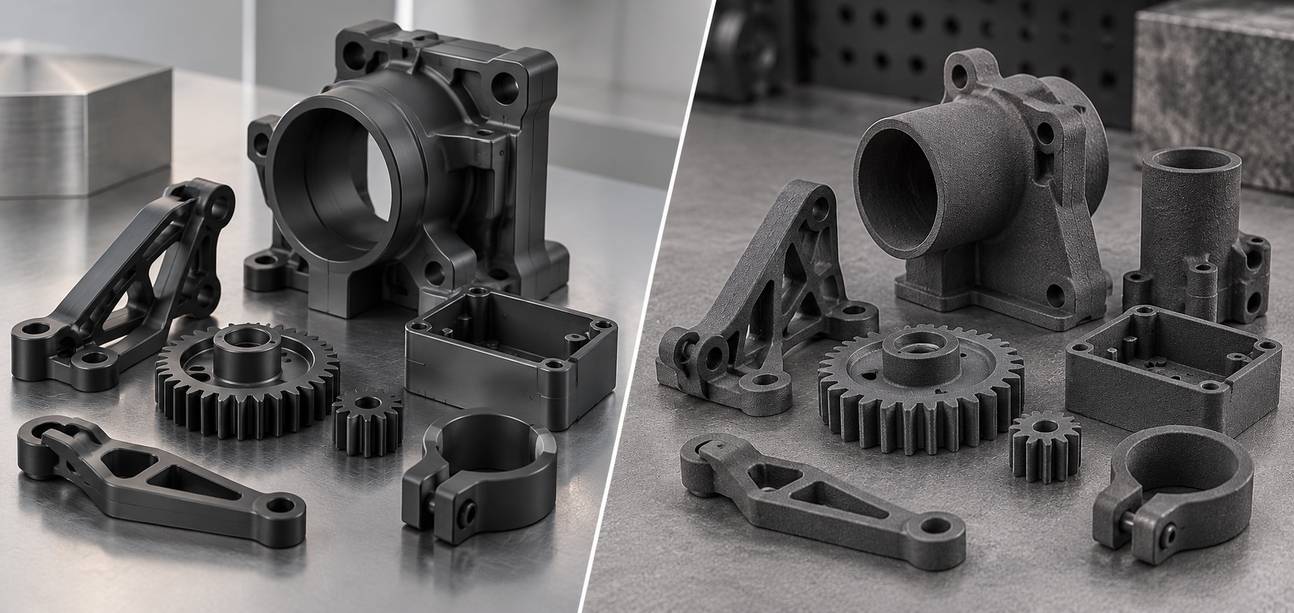
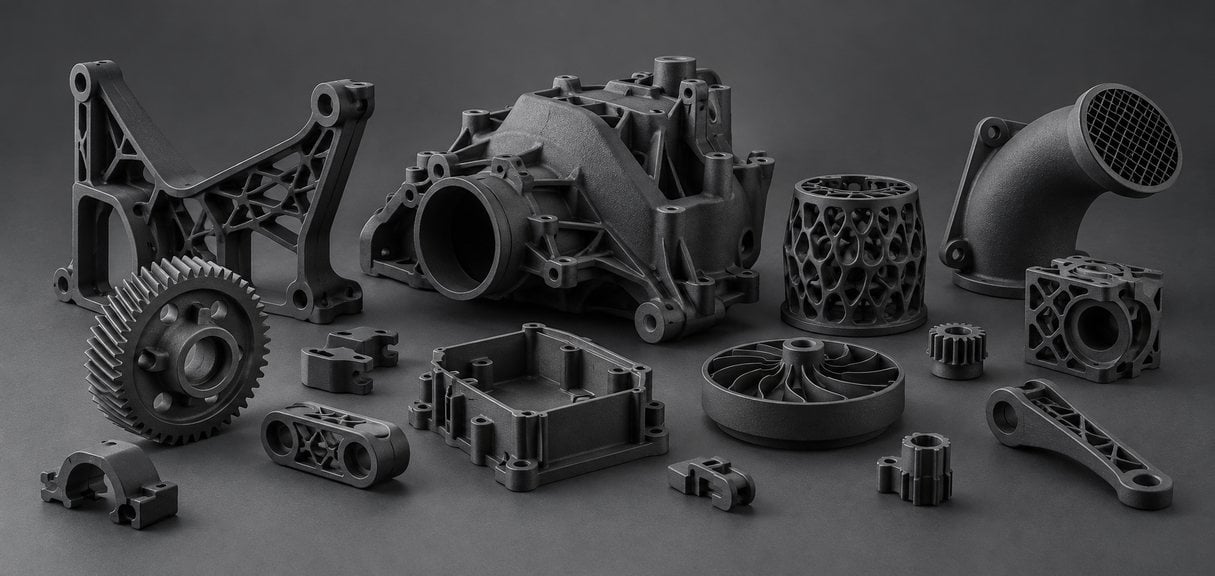
Common MJF 3D printing applications include functional prototypes, housings, brackets, connectors, enclosures, fit-check parts, mechanical components, and low-volume production batches.
Product teams can use MJF parts to check how components fit together before committing to tooling. Engineers may also use the process for functional testing when the available nylon material suits the expected operating conditions.
The support-free powder-bed workflow can accommodate internal channels, interlocking features, and complex geometries when the design allows unused powder to be removed. MJF can also be useful for batches of different parts because several models may be nested within the same build.
Advantages of MJF 3D Printing
One practical MJF 3D printing advantage is that surrounding powder supports the parts during production. Many overhangs and complex shapes can therefore be produced without attached support structures. This can reduce support-removal work and avoid contact marks associated with removable supports.
Batch nesting is another benefit. Parts can be arranged across the build area and at different vertical positions, which can make efficient use of the machine’s build volume. This approach is useful for small production batches or groups of related components.
MJF can also produce complex polymer parts directly from CAD files without molds. Design teams can revise a model and place a new order without modifying physical tooling. This supports prototype revisions and low-volume manufacturing when the geometry and material suit the process.
Limitations of MJF 3D Printing
Every MJF machine has a fixed build volume, so oversized components may need to be divided or produced with another method. Long, thin features and abrupt changes in wall thickness may also cool unevenly and require design changes.
Completed builds need controlled cooling before parts can be removed. This cooling stage affects the total production timeline. Loose powder must also be cleaned from surfaces, cavities, and internal passages. Enclosed spaces may trap powder if the design does not include accessible removal openings.
Freshly printed parts have a characteristic powder-based surface texture. Bead blasting, dyeing, sanding, painting, or another finishing method may be needed when appearance is important. Material availability is also more limited than with processes that support a wider selection of polymers.
MJF vs. SLS 3D Printing
MJF and SLS build polymer parts inside a powder bed, but they use different fusion methods.
|
Comparison Point |
MJF |
SLS |
|
Heat and fusing method |
Applies agents and uses thermal energy |
Uses a laser to sinter selected areas |
|
Powder-bed workflow |
Parts are surrounded by loose powder |
Parts are surrounded by loose powder |
|
Material options |
Depends on provider; Champ3D lists Nylon PA12 HP |
Depends on provider and equipment |
|
Surface characteristics |
Powder-based texture that may be finished |
Powder-based texture that may be finished |
|
Common uses |
Functional prototypes, housings, brackets, batches |
Functional prototypes, complex polymer parts, batches |
|
Selection factors |
Material, geometry, quantity, finish, part requirements |
Material, geometry, quantity, finish, part requirements |
Neither method is suitable for every job. Reviewing SLS 3D printing can help buyers compare available materials, production methods, and design requirements.
When Should You Choose MJF 3D Printing?
Choose MJF when the project requires complex nylon parts, functional prototypes, multiple components in one build, or low-volume production without molds. It may also suit designs with overhangs or internal features that benefit from powder-bed support.
Before ordering, assess part geometry, wall thickness, mechanical needs, surface expectations, material requirements, quantity, cooling behavior, and powder-removal access. An online 3D printing service can help buyers compare MJF with other available technologies.
How to Order an MJF 3D Printed Part
Upload a supported 3D model and select MJF when it matches the design and intended use. Choose the available material and finishing specifications, review the quoted price and production details, and check the model for thin walls, trapped-powder areas, and difficult features.
Once the specifications are confirmed, get a 3D printing quote and submit the order for review and production.