What Is DLP 3D Printing and How Does It Work?
Listen to Content
DLP 3D printing produces detailed resin parts by using projected light to cure liquid material layer by layer. Its ability to expose a complete layer at once makes it useful for small, detailed parts with smooth surfaces and clearly defined features. Designers, engineers, model makers, and product teams commonly consider this process for prototypes, visual models, miniatures, and other precision-focused projects.
What Is DLP 3D Printing?
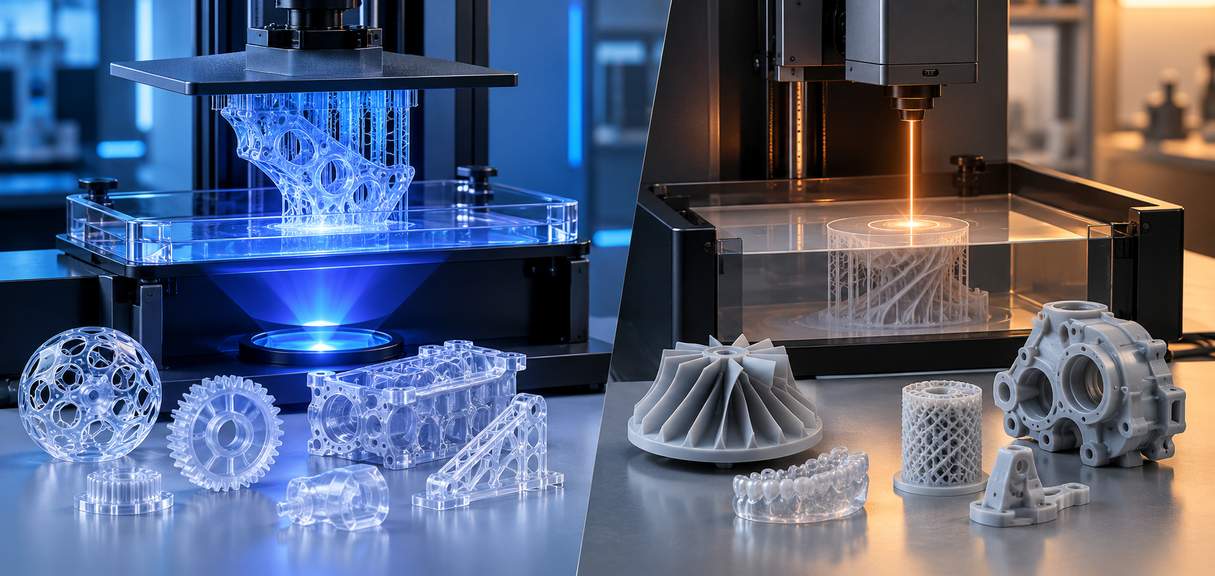
DLP stands for Digital Light Processing. It is a resin-based additive manufacturing method within the vat photopolymerization category. During printing, a projector directs a patterned image of ultraviolet light onto liquid photopolymer resin. The exposed area solidifies to form one cross-section of the part.
The printer repeats this operation until all layers have been formed. Because each projected image represents a complete layer, the process can reproduce small features, sharp edges, and detailed surface patterns. This makes DLP 3D printing suitable for designs in which appearance and feature definition matter.
How Does DLP 3D Printing Work?
The DLP 3D printing process converts a digital model into a physical resin part through five main stages.
Preparing the 3D Model
The process begins with a three-dimensional CAD model. Before production, the file should be checked for issues such as open surfaces, unsupported sections, walls that are too thin, and geometry that cannot be printed successfully. The part may also need to be oriented to balance print quality, support placement, and surface appearance.
Slicing the Model Into Layers
Slicing software divides the model into thin horizontal layers. It converts each layer into a two-dimensional image that tells the projector where light should be applied. Layer settings and orientation can affect feature reproduction, surface quality, supports, and production time.
Projecting Light Onto the Resin
The printer projects the image of a layer onto a vat of liquid photopolymer resin. Resin exposed to the projected light cures and becomes solid. Unlike a method that traces individual points or lines, DLP typically exposes the required area of a layer in one projection.
Building the Part Layer by Layer
After one layer cures, the build platform moves to create space for the next layer. Fresh liquid resin flows into position, and the projector displays the next image. This cycle continues until the printer has formed the complete part.
Post-Processing the Printed Part
A printed DLP part is not generally ready for use immediately after removal. Excess liquid resin must be cleaned away, and support structures must be removed. The part then undergoes UV post-curing. Sanding, smoothing, or paint preparation may be added when the project requires a more refined presentation surface.
What Materials Are Used in DLP 3D Printing?
Champ3D currently lists White and Transparent resin for its DLP 3D printing service.
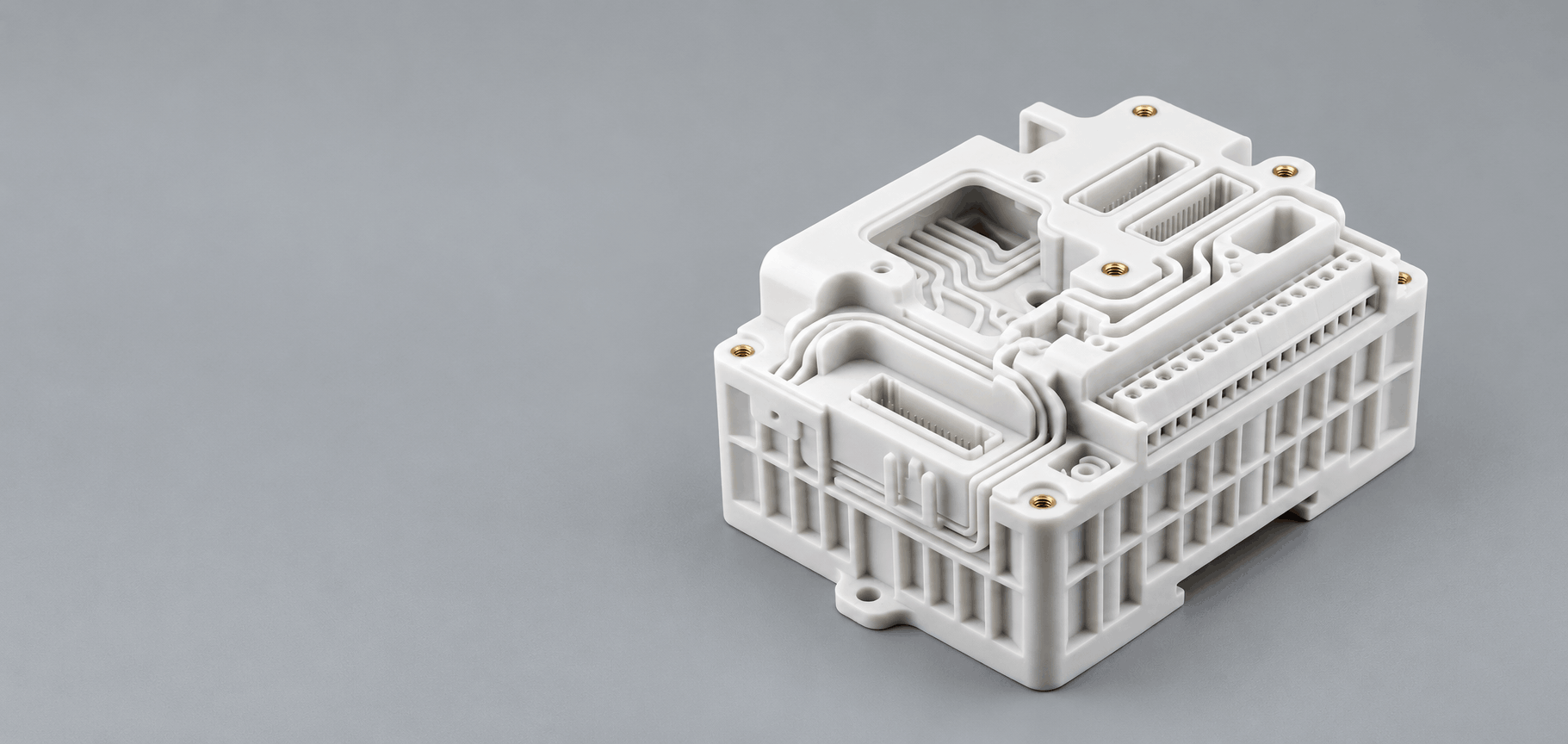
White resin is intended for detailed models, smooth surfaces, and accurate visual prototypes. Its solid color can make edges, contours, textures, and small design elements easier to inspect.
Transparent resin is available for parts where visibility through the model is useful. Champ3D lists for clear parts, fluid-flow models, and designs that require internal features to remain visible.
Material selection should be based on the part’s intended use, required appearance, and operating conditions. Users should confirm project-specific requirements before treating a resin part as suitable for mechanical, thermal, medical, or long-term outdoor use.
What Is DLP 3D Printing Used For?
Common DLP 3D printing applications include detailed prototypes, visual models, small complex parts, miniatures, figurines, dental models, jewelry patterns, and medical demonstration models. Product designers can use the process for form-and-fit checks and presentation prototypes that need a clean resin surface.
DLP can also support small batches when several compact parts fit within the available build area. Suitability still depends on the part dimensions, resin choice, support requirements, and expected function.
Advantages of DLP 3D Printing
One of the main DLP 3D printing advantages is its ability to reproduce fine features. Projected layer images can form small textural elements, narrow details, and intricate geometries when the model follows suitable design guidelines.
Resin printing can produce smooth surfaces with less visible layering than many filament-based prints. This characteristic is helpful for visual prototypes, presentation pieces, miniatures, and models that will be painted.
DLP also exposes a full layer image rather than tracing its complete shape point by point. This layer-exposure method can support efficient production, particularly when printing several small parts at the same height. Actual production time still varies by part height, layer settings, geometry, and finishing needs.
Limitations of DLP 3D Printing
DLP is commonly better suited to small, detailed parts than very large components because the printer’s build area limits part size. Large models may need to be divided into sections or produced through another technology.
Liquid resin requires controlled handling, cleaning, and proper disposal. Parts with overhangs often require support structures, which can leave contact marks after removal. Every print also needs cleaning and UV post-curing, adding steps after production.
Material suitability must be checked carefully. A visually accurate resin model may not have the mechanical strength, heat resistance, flexibility, or durability needed for a specific functional application.
DLP vs. SLA 3D Printing
DLP and SLA use liquid photopolymer resin, but their light-delivery systems differ.
|
Comparison Point |
DLP |
SLA |
|
Light source |
Digital light projector |
Laser |
|
Material family |
Photopolymer resin |
Photopolymer resin |
|
Layer exposure |
Projects a layer image |
Typically traces the layer |
|
Common uses |
Detailed small parts, models, miniatures, patterns |
Detailed prototypes, visual models, smooth resin parts |
|
Selection factors |
Part size, projected resolution, quantity, resin, finish |
Part size, laser spot behavior, resin, geometry, finish |
Neither process is the right choice for every design. Reviewing SLA 3D printing can help buyers compare the two methods based on their project requirements.
When Should You Choose DLP 3D Printing?
Consider DLP when a project involves small parts, intricate features, smooth resin surfaces, or several detailed pieces arranged within one build. It can be a suitable choice for visual prototypes, miniatures, presentation models, jewelry patterns, and parts requiring clear feature reproduction.
Before choosing it, review the model’s overall size, smallest features, wall thickness, support needs, material requirements, quantity, and intended use. An online 3D printing service can help compare DLP with other production technologies when the best option is not immediately clear.
How to Order a DLP 3D Printed Part
Start by uploading a supported 3D model, such as an STL, OBJ, or STEP file. Select DLP when it matches the project, choose the available resin and finishing specifications, and review the generated price and production details.
Check the model carefully before submitting the order, especially its dimensions, thin sections, unsupported geometry, and intended application. When the selections are complete, get a 3D printing quote and submit the design for production.
FAQs
1. What materials can be used in DLP 3D printing?
DLP printers use liquid photopolymer resins that cure when exposed to light from a digital projector. Available resin types vary by provider and typically include standard, tough, flexible, and high-temperature formulations, each suited to different mechanical or cosmetic requirements.
2. How accurate is DLP 3D printing?
DLP accuracy is largely determined by the projector's pixel size, since each pixel cures a fixed area of resin per layer. Smaller pixel sizes produce finer detail and smoother surfaces, though final accuracy also depends on resin type, part geometry, and post-processing.
3. What is DLP 3D printing commonly used?
DLP is often chosen for parts that need fine detail and smooth surfaces, such as dental and jewelry models, small mechanical components, and cosmetic prototypes. Its layer-curing method makes it well suited to small-to-medium parts rather than large-format production.
4. How is DLP different from SLA 3D printing?
Both DLP and SLA cure liquid resin with light, but DLP projects an entire layer at once using a digital projector, while SLA traces each layer point by point with a laser. This generally makes DLP faster for batches of small parts, while SLA can offer finer control on larger builds.
5. Is DLP faster than other resin 3D printing methods?
DLP can be faster than laser-based resin methods like SLA because it cures a full layer in a single exposure rather than tracing it point by point. Actual speed still depends on layer height, part size, and the specific resin used.