
DLP Resin 3D Printing: Faster Production with Exceptional Detail
Listen to Content
When speed and precision are equally important, DLP 3D printing becomes a strong option for modern manufacturing and prototyping.
It combines the detail of resin printing with faster production speeds, making it ideal for businesses that need accurate parts without long wait times.
If you are looking for a 3D printing that balances speed and fine detail, DLP is worth considering.
What Is DLP 3D Printing and How Does It Work?
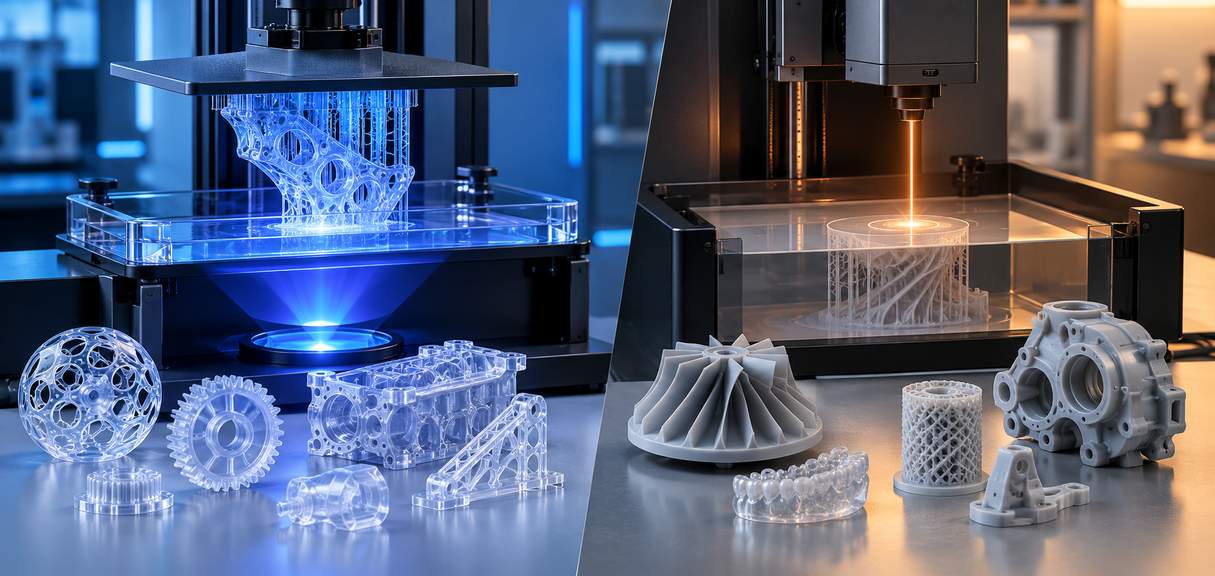
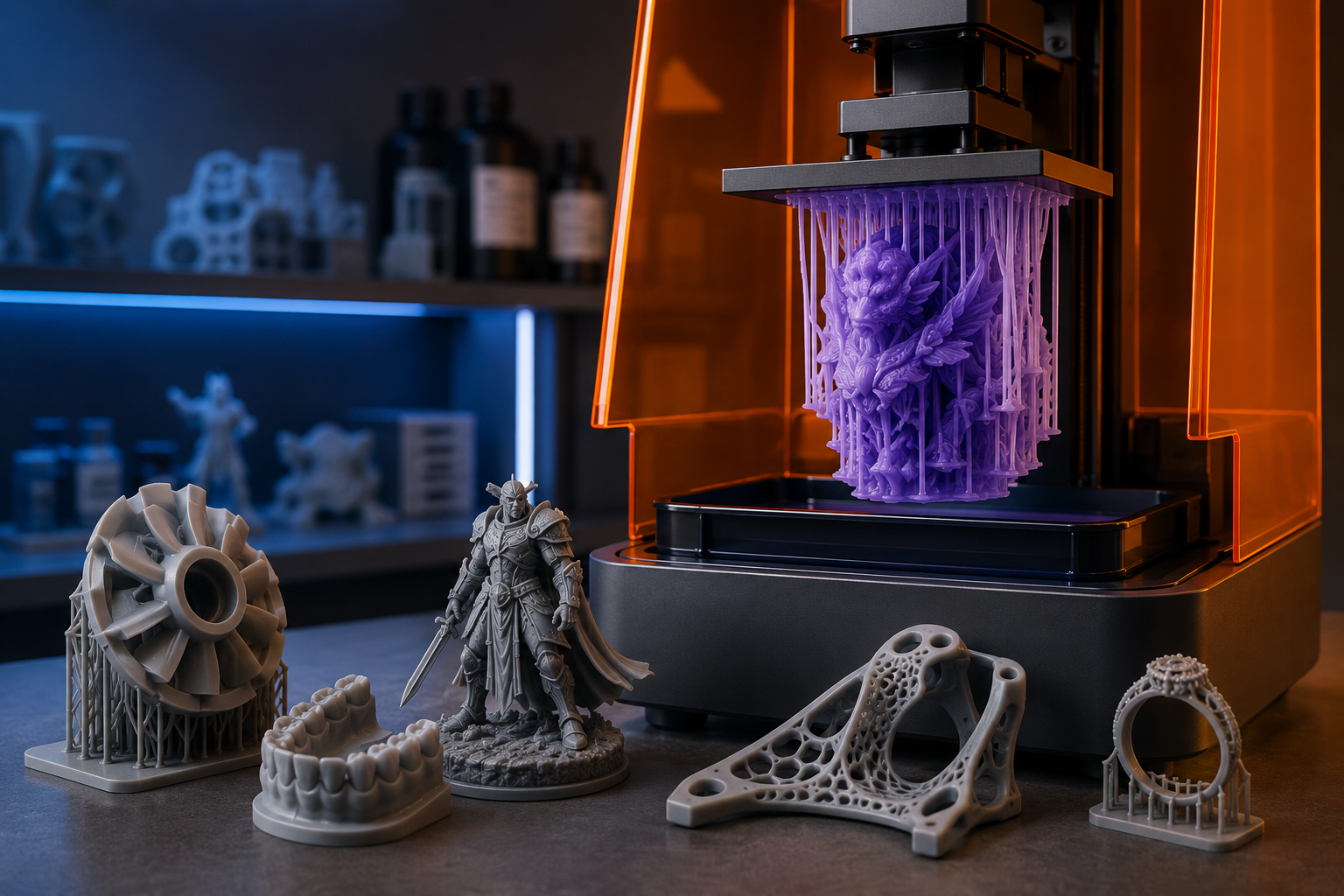
DLP (Digital Light Processing) is a resin-based 3D printing technology that uses a digital projector to cure liquid resin into solid layers.
Unlike laser-based methods, DLP projects an entire layer at once, which significantly speeds up the printing process.
How the process works:
- A 3D model is sliced into layers
- A projector flashes light onto the resin vat
- Each full layer is cured in a single step
- The build platform moves upward
- The final part is cleaned and cured
This layer-wide curing is what gives DLP its speed advantage.
If your project needs faster turnaround with high detail, you can explore the DLP Resin 3D Printing Service at Champ3D and request a quote.
Why Is DLP 3D Printing Faster Than Other Methods?
The main difference lies in how each layer is formed.
Key reason:
Entire Layer Curing
DLP cures a full layer in one projection, unlike point-by-point curing used in other methods.
What this means for your project:
- Faster build times
- Efficient batch production
- Consistent results across multiple parts
This makes DLP especially useful when producing several small models at once.
What Are the Benefits of Using a DLP 3D Printing Service?
DLP offers a balance between speed and quality, making it suitable for many applications.
Key advantages:
High Detail Accuracy
DLP produces fine features and sharp edges, similar to other resin-based methods.
Faster Turnaround
Ideal for projects with tight deadlines or repeated production needs.
Consistent Output
Each layer is cured evenly, resulting in uniform parts.
Efficient for Small Batches
Multiple items can be printed simultaneously without affecting speed significantly.
When Should You Use DLP 3D Printing?
DLP is best suited for projects where both precision and speed are required.
Common use cases:
Dental and Medical Applications
Accurate models are essential for treatment planning and device creation.
Miniatures and Collectibles
Small, detailed objects benefit from DLP’s precision.
Small Batch Production
Efficient production of multiple identical parts.
Product Prototypes
Fast iteration cycles for testing and development.
If you are evaluating different technologies, reviewing the full 3D Printing Service Guide can help you choose the right method.
What Materials Are Used in DLP 3D Printing?
DLP uses photopolymer resins similar to other resin-based methods.
Common material options:
- Standard resin for general models
- Rigid resin for structural parts
- Flexible resin for soft components
- Castable resin for molds and patterns
Material selection affects durability, flexibility, and final appearance.
How Accurate Is DLP 3D Printing?
DLP offers high precision and consistent detail.
Accuracy highlights:
- Fine layer resolution
- Sharp feature reproduction
- Smooth surfaces with minimal defects
Because each layer is cured uniformly, the final output maintains consistency across the entire model.
What Are the Limitations of DLP 3D Printing?
While DLP is efficient and precise, it has certain limitations.
Key considerations:
Limited Build Size
DLP is better suited for small to medium-sized parts.
Material Constraints
Resin options may not match the strength of some thermoplastics.
Post-Processing Required
Cleaning and curing are necessary for final strength.
Cost Considerations
More expensive than basic filament printing methods.
For projects requiring larger or more durable parts, other technologies may be more suitable.
How Much Does DLP 3D Printing Cost?
The cost depends on:
- Model size and volume
- Type of resin used
- Number of parts being printed
- Post-processing requirements
DLP is generally priced between high-precision and budget-friendly methods.
To get an accurate estimate, you can upload your design and get a instant 3D printing quote from Champ3D.
How Long Does DLP 3D Printing Take?
DLP is known for faster production compared to many other methods.
Typical timelines:
- Small models: 1–3 days
- Batch production: efficient due to layer-wide curing
- Complex designs: may take longer depending on detail
Because multiple parts can be printed at once, DLP is highly efficient for repeat jobs.
Is DLP 3D Printing Better for Batch Production?
Yes, DLP is particularly effective for batch production of small parts.
Since entire layers are cured at once, printing multiple items does not significantly increase production time.
This makes it ideal for:
- Repeated prototypes
- Small manufacturing runs
- Custom product batches
FAQs About DLP 3D Printing Service
- What is the difference between DLP and other resin printing methods?
DLP uses a projector to cure entire layers at once, while other methods may cure point by point.
- Is DLP suitable for functional parts?
It can be used for certain applications, depending on the resin chosen.
- Why is DLP faster than other methods?
Because it cures full layers in one step instead of tracing each section individually.
- Can DLP print multiple parts at once?
Yes, and this is one of its biggest advantages for small batch production.
- Do DLP prints need post-processing?
Yes, cleaning and curing are required to achieve final strength and finish.
Start Your DLP 3D Printing Project with Champ3D
DLP is the right choice when you need a combination of speed, accuracy, and consistent output.
Whether you are producing small batches or detailed prototypes, this technology helps reduce turnaround time without compromising quality.
Champ3D provides reliable DLP printing with expert support to ensure your project meets expectations.
Upload your design and get a quote from Champ3D today to get started with fast and precise 3D printing.